Playa de Maro: The Complete Beach Guide
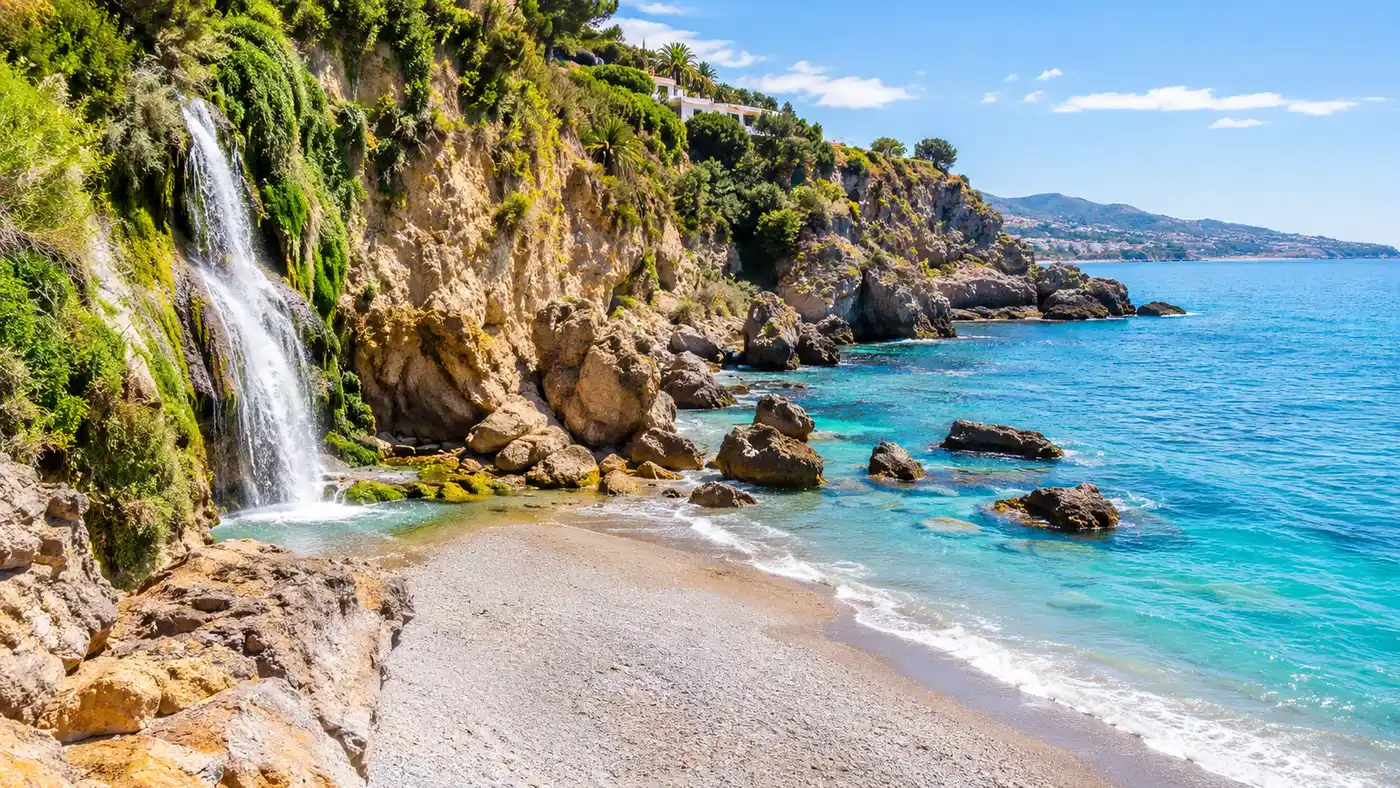
You round the final bend on the old coastal road, drop down past the plastic greenhouses, and suddenly the concrete sprawl of the western Costa del Sol vanishes completely. Tucked beneath dramatic limestone bluffs and sugar cane terraces, playa de maro feels like an Andalusian secret that somehow survived the tourism boom of the 1970s. It is wild, raw, and wonderfully uncluttered by high-rise hotels. The water here possesses an intense turquoise tint you usually have to take a ferry to the Balearic Islands to find.
I have spent years exploring the coves between Nerja and Almuñécar, yet this specific inlet remains the place I drag friends whenever they visit southern Spain. It is not an untouched wilderness where you will be alone with your thoughts in mid-July. Far from it. Still, the dramatic cliff scenery, clear swimming water, and relaxed vibe make it one of the absolute finest spots on the coastline. This guide walks you through the practical details, from handling the steep parking situation to paddling out toward hidden sea caves.
Book your maro waterfall experience:
What Makes Playa de Maro So Unique?
Most beaches lining the Malaga coast are flat, urban, and flanked by endless rows of identical apartment blocks. This strip of coastline breaks that mold entirely. Located five kilometers east of Nerja, the beach sits right inside the Maro-Cerro Gordo Cliffs Natural Area, a protected coastal ribbon that stretches past the provincial boundary into Granada. Because local environmental laws strictly outlaw construction along these sheer cliffs, the backdrop remains green, agricultural, and delightfully rugged.
The geography completely dictates the experience. Towering walls of layered rock flank both ends of the cove, sheltering the water from heavy southwestern chop. Springs seep through the porous stone, nurturing clusters of reeds, bamboo, and wild rosemary that tumble almost directly into the salt. While plenty of people search for a classic maro sandy beach, what you actually get here is a coarse mix of dark volcanic sand, rounded grey shingle, and larger pebbles. It might not feel like powdery Caribbean sand under your feet, but that coarse texture is precisely why the water stays so astonishingly clear.
Playa de maro spain also marks the transition where the Sierra Almijara plunges directly into the sea. That dramatic drop continues underwater, creating an intricate marine topography of underwater caverns, submerged boulders, and healthy seagrass meadows. It feels completely distinct from the wide, manicured stretches of sand in nearby towns.
Swimming, Snorkeling, and the Shoreline
The water clarity at maro beach nerja spain is legendary across Andalusia. Step three meters into the sea and you immediately see schools of small striped bream darting around your ankles. You do not need expensive diving equipment to appreciate it. A simple diving mask and snorkel reveal wrasse grazing on algae-covered rocks, purple sea urchins wedged into crevices, and occasional octopuses tucked away under rocky ledges.
Pro tip: Bring cheap neoprene water shoes rather than standard flip-flops, because the dark pebbles get scorching hot by early afternoon and stepping over the slick submerged rock shelf can bruise your arches.
Families love this bay, though parents with very young toddlers need to keep a close eye on the water line. The shelf drops off steeply after just four or five paces. One moment the sea is at your knees, and the next you are treading three meters of open water. For competent swimmers and older kids, this steep drop is ideal since you do not have to wade through hundreds of meters of shallow muck just to get your shoulders wet.
The shoreline facilities cover the basics without ruining the rustic atmosphere. You will find basic showers to rinse the salt off your gear, functional seasonal toilets, and a first-aid hut staffed by local lifeguards from June through September. Wooden walkways run partway down the slope so you do not burn the soles of your feet on the dark stones before reaching your towel.
- Beach surface: Coarse dark sand blended with small smooth stones and pebbles.
- Water conditions: Generally calm and remarkably clear, with immediate depth drop-offs.
- Lifeguard coverage: On duty daily between 11:00 AM and 7:00 PM during high summer.
- Crowd profile: A healthy blend of local Spanish families, campers, and day-trippers from Malaga.
Kayaking from Playa de Maro to the Waterfall
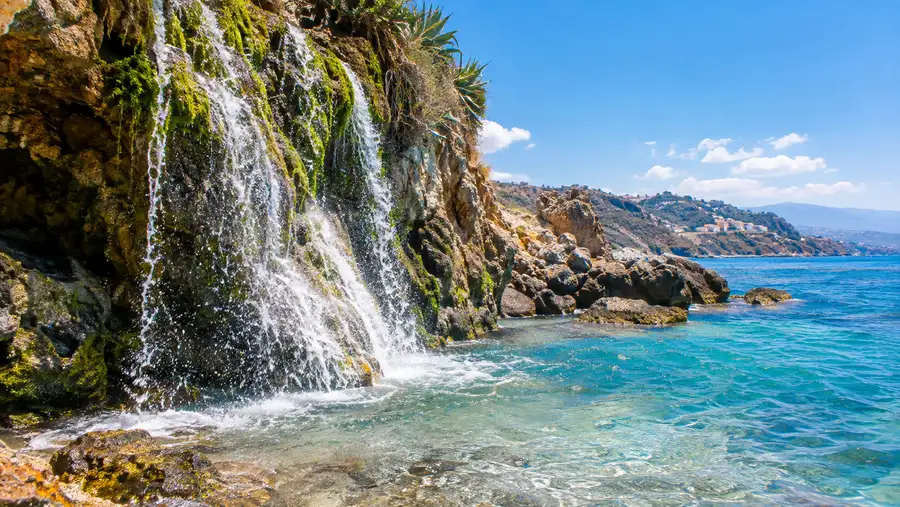
Lazing on a lounger is tempting, but the real magic of this cove lies out on the water. Renting a sea kayak right off the sand is practically mandatory if you have any energy. Paddling eastward along the base of the cliffs takes you past inaccessible sea caves, miniature hidden pebble beaches, and jagged rock towers where yellow-legged gulls nest.
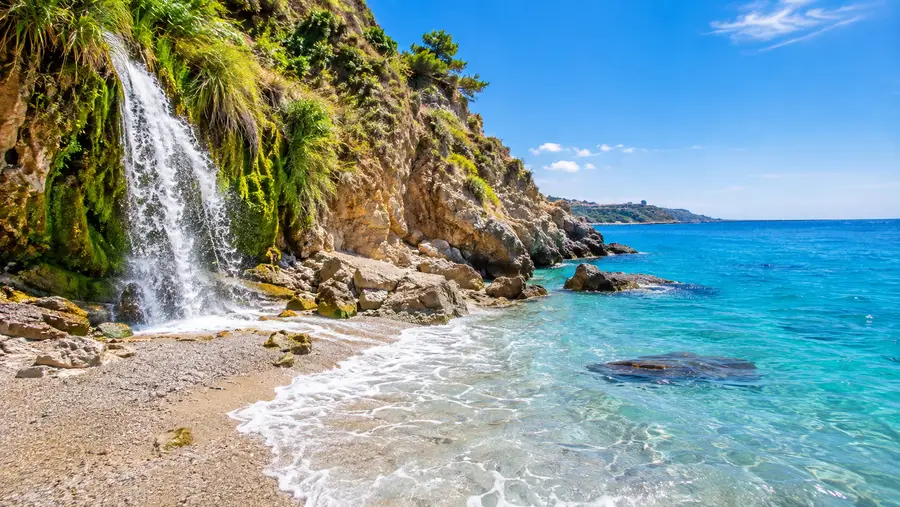
The main objective for most paddlers is the Cascada de Maro, a freshwater waterfall dropping directly into the Mediterranean. Water spills over a limestone ledge roughly seven meters above the sea, showering paddlers below with crisp mountain run-off. If you want the complete route breakdown with safety tips, check out our full guide to kayaking in Nerja and the Maro waterfall before setting out. It takes roughly 25 to 30 minutes of gentle paddling each way from the beach to reach the falls.
You can rent sit-on-top kayaks directly from the outfitters stationed on the sand between May and October. They hand you a paddle, a life vest, and a watertight canister for your car keys or phone. Stand-up paddleboards are also available, though even a slight breeze can make balancing on a paddleboard exhausting compared to sitting down in a kayak.
| Activity / Equipment | Duration | Approximate Cost | Best Suited For |
|---|---|---|---|
| Single Sit-on-Top Kayak | 1 Hour | €12 - €15 | Solo exploration along the cliffs |
| Double Tandem Kayak | 1 Hour | €20 - €24 | Couples or a parent with one child |
| Stand-Up Paddleboard | 1 Hour | €15 - €18 | Calm mornings with zero wind |
| Guided Kayak Tour | 2.5 Hours | €30 - €35 | First-timers wanting local cave history |
| Sun Lounger Pair + Umbrella | Full Day | €14 - €18 | Relaxing without burning on the pebbles |
Book your maro waterfall experience:
Food, Drinks, and the Playa de Maro Restaurant
You do not need to pack a massive cooler of sandwiches unless you want to save money. Sitting slightly elevated above the western edge of the sand is Chiringuito de Maro, a straightforward Spanish beach restaurant that serves cold drinks, fresh seafood, and massive portions of paella. Sitting under their bamboo shade with a sweating glass of beer after a long kayak session is pure summer bliss.
The food is classic Costa del Sol beach fare. The kitchen turns out skewers of sardines grilled over olive wood in an old fishing boat, plates of deep-fried baby squid, and crisp tomato salads dressed in local olive oil. It is unpretentious, noisy, and wonderfully Spanish. Prices are fair considering they have a captive audience down in the cove, with most fish platters running around €9 to €14.
Note: The chiringuito stops taking lunchtime walk-in tables surprisingly early on peak summer weekends once their kitchen gets backed up, so wander up and reserve a table the moment you set down your towel in the morning.
If you prefer a quieter meal, the sleepy village perched on the cliff above offers a couple of small cafes around the church square. Packing fresh fruit, almonds, and bread bought from a village market makes for a lovely picnic right on the stones, especially if you hang around until early evening when the restaurant kitchen shuts down.
Parking Realities and Arrival Tips
Getting to beach maro requires a little patience because the geography that keeps it pretty also makes vehicle access tight. A narrow, steep asphalt road snakes down from the village through private avocado and loquat orchards. The road terminates near the sand, but regular public vehicle access down to the shoreline is closed during the busy months to prevent total gridlock.
During summer, a barrier usually operates near the top of the hill. You park in designated dirt lots around the village outskirts and either walk down or catch the small shuttle van that runs every 15 to 20 minutes for around €1.50 per person. Walking down takes about 12 minutes downhill, which is quite pleasant in the morning shade. The walk back up at 4:00 PM under a blistering Andalusian sun is an entirely different story. We have put together a dedicated walkthrough on how to get to Maro beach that breaks down the bus schedules, walking routes, and overflow parking zones.
- Target arrival hour: Pull into Maro village before 9:30 AM in July or August to grab easy parking.
- The hill climb: Save €1.50 in coins for the return shuttle unless you fancy a brutal uphill hike.
- Sun protection: Bring a sturdy beach umbrella with a heavy screw anchor, as the wind picks up around 2:00 PM.
- Footwear choice: Wear sneakers or strapped sandals for the walk down; change into water shoes at the shore.
If the main cove is bursting at the seams when you arrive, don't panic. The neighbouring inlets along the cliffs offer different vibes, and a short walk across the bluff trail can lead you toward smaller, quieter patches of coastline where the crowds thin out quickly.
Frequently Asked Questions about playa de maro
Is Playa de Maro sandy or pebbly?
It is mostly dark, coarse sand mixed heavily with smooth grey pebbles and small stones. While you can easily lay out a towel, walking barefoot along the waterline can be uncomfortable, making water shoes very helpful.
Can you drive your car directly onto the beach?
No. Private vehicle access down the access road is blocked by local monitors during peak summer to prevent traffic jams. Visitors park up around the village and either walk down the hill or take the local shuttle bus.
Are there public toilets and showers on site?
Yes, basic outdoor showers and public chemical toilets are open throughout the summer season near the entrance ramp by the restaurant.
How far is the Maro waterfall from the beach?
The waterfall is roughly 1.2 kilometers east along the cliff base. In a standard rental kayak, paddling there takes roughly 25 to 30 minutes at an easy, steady pace.
Quick Reference
- Location: 5 km east of Nerja, Malaga
- Beach surface: Dark coarse sand and pebbles
- Facilities: Lifeguards, chiringuito restaurant, showers, kayak rental
- Summer access: Restricted road; village parking with shuttle service
Book your maro waterfall experience:
Is It Worth the Trip?
Playa de maro málaga is not the place for travelers who want pristine white sand, manicured boardwalks, and rows of cocktail lounges. It demands a bit of sweat on the walk down and some tolerance for hot stones between your toes. In exchange, you get wild coastal beauty, unmatched water clarity, and some of the best cliff-side kayaking anywhere in southern Spain. Grab your mask, leave the heavy beach gear behind, and catch the morning light bouncing off those cliffs.
Read more about maro waterfall.