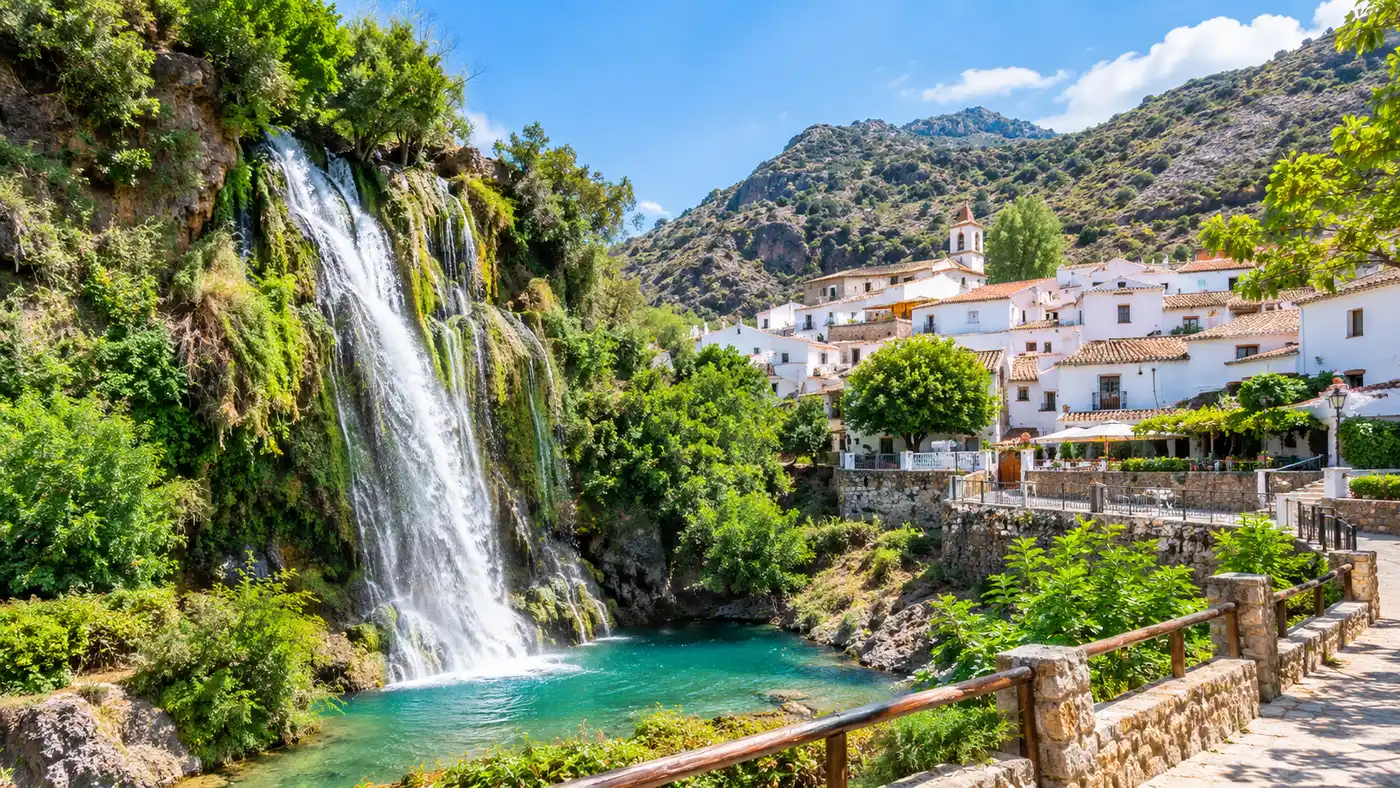
Visiting Maro Village, Spain: Travel Guide
Most drivers blow straight past the exit on the A-7 highway without blinking. If you keep your foot on the gas, you cross a high bridge and end up near the plastic greenhouse fields of Almería before you even realize what you missed. Perched on a limestone ledge above the Mediterranean Sea, maro spain feels like an afterthought to modern tourism. It is small. Really small. Around 800 people live here year-round, tending avocado trees, sweeping whitewashed doorsteps, and watching the sea shimmer from cliff edges that drop almost 200 meters into turquoise water.
Nerja is barely three miles west, humming with busy souvenir shops, crowded hotel lobbies, and English breakfast signs. Step off the local bus in Maro, though, and the volume drops instantly. You smell wild fennel in the spring and woodsmoke in December. The streets are steep and blindingly bright under the midday sun, laid out in stones that have smoothed out under work boots over decades. I spent three nights here last year when I originally planned to stop for an hour. This guide covers how to explore the village properly, from its back alleys and ruined sugar mills to the dramatic coast below.
Book your maro waterfall experience:
Why Maro Village Spain Deserves More Than an Afternoon
Maro is officially a pedanía, an administrative district belonging to Nerja. You would never guess that from talking to locals in the plaza. The people here have their own distinct identity, rooted in the surrounding soil and the sea. For generations, life revolved around sugar cane fields and fishing boats hauled onto gravel shores. When coastal development swept across southern Spain in the 1970s, Maro remained largely frozen in place, protected by rugged geography and the steep cliffs of the Maro-Cerro Gordo natural park.
The pace of life here catches you off guard. Around two in the afternoon, metal shutters rattle down across the village. Dogs find patches of shade under bitter orange trees. You will not find open convenience stores or bustling boutique shops during these middle hours of the day. It forces you to slow down. You sit on a bench with a cold drink, listen to the fountain trickle, and wait for the heat to ease.
Pro tip: Grab an espresso at Bar La Entrada around 8:30 AM before any day-trippers arrive, and take a seat out front to watch neighbors exchange morning gossip and fresh produce from their orchards.
A huge part of the charm comes from the dramatic clash between the rugged foothills of the Sierra de Almijara and the sea. You can stand in the church square and look up at rocky gray peaks, then pivot slightly to see deep blue Mediterranean water rolling toward North Africa. That contrast is rare on this stretch of coast, where apartment towers have erased much of the original scenery.
Exploring the Heart of Maro Andalucia: Sights and Streets
You can walk across the entire village in roughly ten minutes. Doing so quickly defeats the purpose of being here. The best way to see Maro is simply to wander down Calle Real, poking your head down every narrow side street that shoots off toward the cliffs.
At the center of everything sits the Plaza de la Iglesia. It is shaded by thick ficus trees and flanked by Nuestra Señora de las Maravillas, a charming 17th-century church with a terracotta tile roof and simple yellow accents. Behind the church, a stone terrace overlooks the sea and the terraced plots of avocados cascading toward the water. On clear mornings, you can see fishing skiffs trailing silver wakes across the marine reserve.
- Balcón de Maro: The viewing terrace behind the parish church, offering wide coastal panoramas without the crowds found at Nerja's famous viewpoint.
- Iglesia de Nuestra Señora de las Maravillas: Built in the 1600s and restored after fires, this quiet church honors the village's patron saint with an understated wooden altar.
- Ingenio de Maro: The atmospheric brick and stone ruins of a 16th-century sugar mill, standing on the village edge as a reminder of the region's agricultural past.
- Acueducto del Águila: Located just west of the village center, this towering four-story 19th-century brick aqueduct still carries water across the ravine.
A short stroll west brings you toward the Eagle Aqueduct, or Acueducto del Águila. Built in the late 1800s to supply water to the local San Joaquín sugar refinery, it spans the Barranco de la Coladilla ravine with dozens of horseshoe arches. Standing beneath it gives you a quick appreciation for 19th-century industrial masonry. Most people snap a photo through a car window from the highway bridge, but walking down into the ravine path lets you see the brick craftsmanship up close.
The sugar mill ruins, known locally as the Ingenio, sit right on the northern edge of the village. The mill was erected around 1585 by the lords of Maro. Today, crumbling masonry walls and rusted iron beams remain, framed by overgrown weeds and olive branches. It feels slightly wild and forgotten, adding an earthy, weathered texture to an afternoon walk.
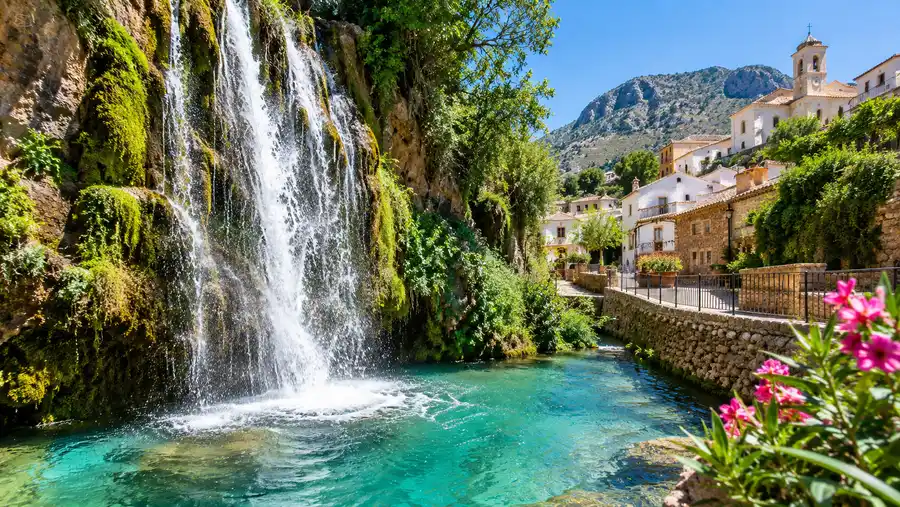
Beaches Below Maro Nerja Spain
The coastline directly underneath the village is protected within the Paraje Natural Acantilados de Maro-Cerro Gordo. Because commercial construction is banned along these cliffs, the beaches look wild compared to the flat resort strips in central Malaga province. The sand is coarse, mixed with dark pebbles and clear water that stays glassy on calm mornings.
Playa de Maro is the main beach here, reached by walking or driving down a twisting asphalt road lined with tropical fruit orchards. It has a single chiringuito serving grilled sardines, a kayak rental shack, and public restrooms. If you fancy paddling along the base of the dramatic limestone cliffs, taking a trip kayaking in Nerja and Maro waterfall reveals hidden sea caves you simply cannot reach by foot. For deep details on parking, seasonal rules, and facilities at the main bay, check out our dedicated Playa de Maro guide.
Note: During July and August, the paved access road down to Playa de Maro closes to private vehicles once parking spots fill up, leaving visitors to rely on an occasional shuttle or face a steep 20-minute uphill hike back in blazing heat.
If you prefer fewer people and do not mind dirt paths, walk toward Playa de la Caleta instead. It sits immediately west of the main cove, tucked under an ancient watchtower. The path down starts near the edge of the village homes and drops steeply through cane brakes. There are zero facilities, so bring your own water and a sun umbrella if you plan on spending the afternoon.
| Beach Name | Distance from Village | Access Difficulty | On-Site Facilities |
|---|---|---|---|
| Playa de Maro | 1.2 km (paved road) | Easy by car/bus, moderate on foot | Restaurant, kayak hire, showers |
| Playa de la Caleta | 0.8 km (dirt trail) | Moderate, steep steps and dirt path | None |
| Playa Molino de Papel | 2.1 km (cliff trail) | Challenging, loose gravel path | None |
The marine life under these cliffs is exceptional. The underwater shelf is protected from commercial trawlers, meaning schools of sea bream, octopuses, and bright wrasse swim right up to the shallow rocks. Pack a basic mask and snorkel. You will see more marine life ten feet from the rocks here than on any sandy tourist strip in Torremolinos.
Book your maro waterfall experience:
Where to Eat and Stay: Finding a Spot in Maro Malaga
Maro does not have luxury resorts, valet parking, or buzzing cocktail lounges. Accommodations are restricted to private townhouse rentals, small bed-and-breakfasts, and one main family-run establishment. Staying inside the village allows you to experience the evening calm after day-trippers head back to Nerja.
The focal point for overnight guests is Hotel Playa de Maro. Situated right on Calle San Miguel, it offers straightforward, spotless rooms, a pleasant courtyard, and a rooftop pool with panoramic views spanning from the mountains to the sea. The owners run the attached restaurant, which serves classic Andalusian fare like fried eggplant drizzled with local cane honey and fresh local swordfish. It is simple, affordable, and honest hospitality.
- Hotel Playa de Maro: The primary base in town with twenty-odd comfortable rooms, a small plunge pool, and reliable local food downstairs.
- Casa Miguel: A great lunch spot along the main road where you can get grilled lamb chops, cold beer, and a friendly welcome from longtime locals.
- Bar La Entrada: Positioned at the village entrance, perfect for quick morning tostadas with grated tomato and olive oil.
- Self-Catering Townhouses: Several older village homes have been converted into holiday rentals featuring internal patios and rooftop terraces.
Dining options inside Maro are limited to three or four traditional bars. If you want ten-course tasting menus or international fusion food, you will need to head into Nerja. But if you are happy with a plate of jamón, grilled calamari, and a cold caña while sitting outside on a balmy evening, Maro hits the spot. Prices remain lower than the coastal hubs nearby. A solid lunch with wine often comes to under €16 per person.
Nighttime in Maro is quiet. Really quiet. The main activity after 9:00 PM involves sitting in the square with a scoop of gelato or sipping a glass of sweet Malaga wine while children kick a soccer ball against the church wall. It feels like an older Spain that has vanished from most of the southern coastline.
Getting Around Maro Malaga Spain
Getting to Maro is straightforward because the coastal N-340 road runs along its northern boundary, and the A-7 Mediterranean motorway has a designated exit right beside the village. If you land at Malaga Airport, driving east takes about 45 minutes outside of peak traffic periods.
For non-drivers, local buses make traveling between Nerja and Maro easy. The local urban bus line runs several times a day between the Nerja bus station and the roundabout at the entrance of Maro for roughly €1.20. Regional ALSA coaches heading toward Almuñécar and Motril also stop near the village entrance. Just make sure to tell the driver you want to get off at Maro before boarding, as they can bypass the stop if nobody rings the bell.
Walking between Nerja and Maro takes about 45 minutes. A wide pedestrian walkway and bicycle path runs parallel to the N-340 road, complete with street lamps and safety railings. It is a pleasant walk in the morning, taking you directly past the famous Nerja Caves (Cuevas de Nerja), which sit midway between the two settlements. Avoid doing this walk at 2:00 PM in August, as the path offers minimal shade from the brutal Andalusian sun.
Parking inside Maro can be tricky during summer weekends. The village streets are too narrow for standard cars, so all visitors must park in the municipal gravel lots located on the edge of the town. These spaces fill up quickly by 11:00 AM in high season, so early arrivals get the easiest spots.
Frequently Asked Questions about maro spain
Is Maro village worth visiting if I am already staying in Nerja?
Yes. It takes less than ten minutes to get here from Nerja, and the quiet, traditional atmosphere provides a dramatic contrast to the busy tourist center. The coastal views and historical architecture make it well worth a half-day or full-day trip.
How do I reach the beach from the village?
You can walk down Calle Maro to the paved beach road, which takes about 15 to 20 minutes on foot downhill. In the summer, a municipal shuttle bus often runs up and down the hill between the village edge and the sand for a small fee.
Are the Nerja Caves located in Maro?
Geographically, the Nerja Caves sit right on the border between Nerja and Maro, barely a ten-minute walk from the western entrance of Maro village. Many travelers combine a morning visit to the caves with an afternoon in Maro.
Is Maro wheelchair accessible?
The main streets like Calle Real and Plaza de la Iglesia are relatively flat and easy to navigate with mobility aids. However, the side alleys and paths descending down to the sea are steep, uneven, and challenging for wheelchair users.
Quick Reference
- Population: roughly 800 residents
- Distance from Malaga Airport: 65 kilometers (45-minute drive)
- Local transport: urban bus link to Nerja every 45 to 60 minutes
- Best months to visit: May, June, September, and October
Book your maro waterfall experience:
The Bottom Line
Maro is not designed for travelers who need buzzing nightlife, endless souvenir stalls, or five-star pampering. It is built for mornings on quiet cliff trails, afternoons reading in the shade of a ficus tree, and slow dinners with grilled fish and cold local beer. If you are exploring the eastern corner of Malaga province, spend at least a night or an afternoon here. Step into the village square, listen to the bells of Nuestra Señora de las Maravillas, and let Andalusian life unfold at its own natural speed.
Read more about maro waterfall.